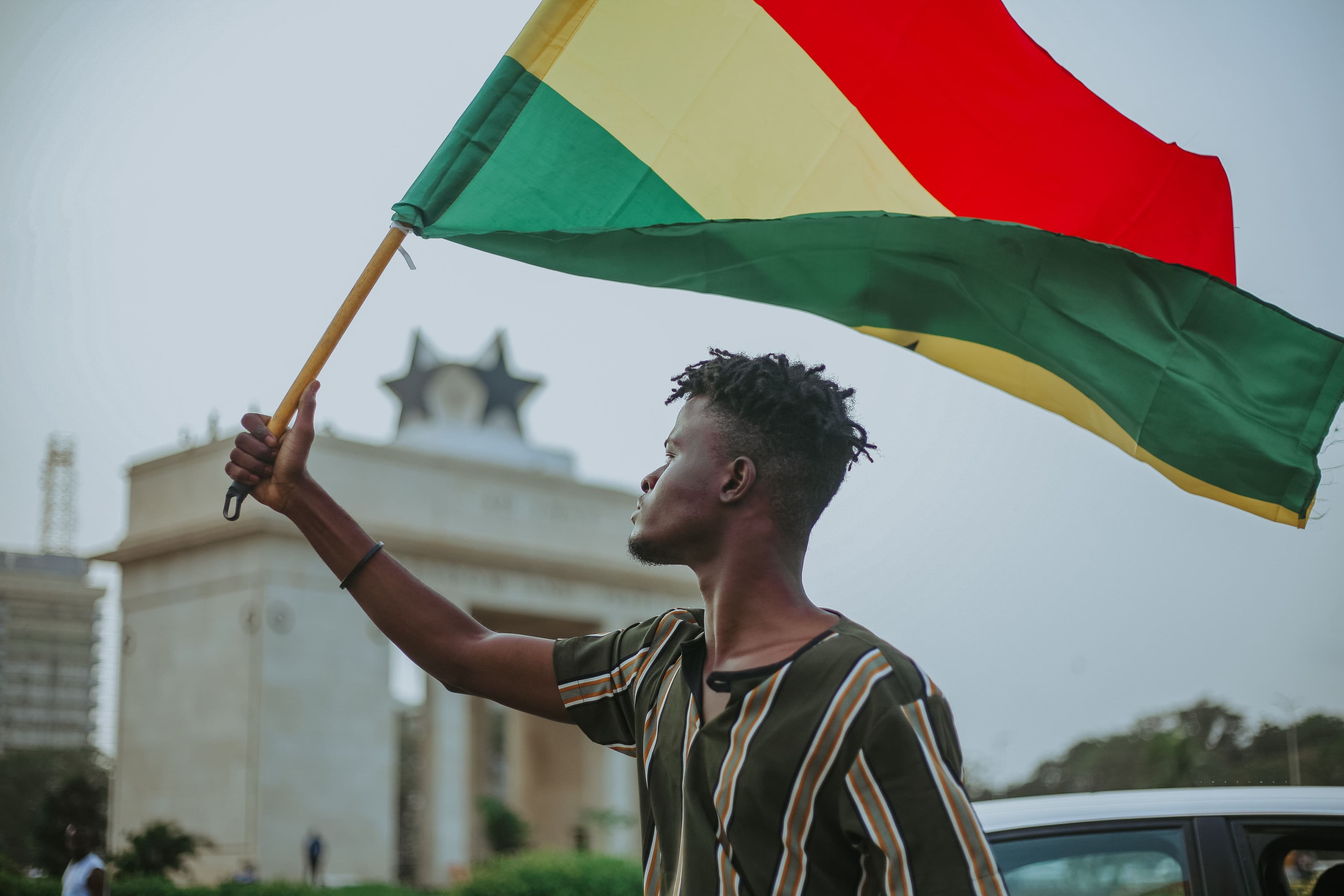
Bibini nso yɛ nnipa is a disparaging remark meant to undermine the intellectual, creative and leadership capacity of the Ghanaian. It often invokes thoughts of self-hatred, lack of racial pride and neocolonial conditioning. However, there's a subtle proclamation that goes unnoticed due to the lack of nuance in these conversations: Black people are not valuable enough to be human beings. This prompts bigger questions around the concept of value. What is value? What is the criterion for defining value? Who set these criteria? Why are the elements of said criteria valid indicators of value? The answers to these questions serve as the underpinnings that define a society's culture, and by extension, its identity and sense of self-worth.
The phrase, often said in jest, passes as harmless parlance in the milieu of the average Ghanaian. While a bit of levity is always welcome in everyday banter, the casual manner in which it rolls off the tongue causes us to make an uncomfortable observation: the Ghanaian is apathetic towards his own self-worth and that of his kin, and trivialises their accomplishments as well.
Imperialism did not merely seize territory; it seized the eyes that beheld it. It introduced a global hierarchy of value in which Europe positioned itself as the standard of civilisation, intelligence, morality and beauty while Africa was positioned as primitive, backwards and inferior. These ideas were reinforced through education systems, religion, media, economics and governance structures for generations. Speaking English became associated with intelligence. European education became associated with civilisation. Foreign goods became associated with quality. Over time, these associations transformed into values. Eventually, these values crystallised into culture.
This is why traces of anti-black behaviour appear in everyday Ghanaian life without many people consciously recognising it; these are not isolated patterns. They are cultural expressions of an inherited value system. And because culture shapes identity, the result is often an identity crisis; a society cannot fully believe in itself while subconsciously viewing itself through the eyes of people who historically devalued it. The persistence of phrases like 'bibini nso yɛ nnipa' and 'ɛnti bibini be yɛ den wo wiase?' within the vocabulary of the average Ghanaian affirms this sentiment.
This self-loathing disposition manifests in tendencies that quietly place proximity to anything foreign at the top of the value chain.
Case in point: Foreign-used clothes are more desired in the fashion market, so much so that Ghana is the second largest importer of foreign used clothes in Africa; meanwhile, local manufacturers struggle to get any recognition. Also, foreign used cars and Chinese manufactured vehicles dominate our streets, while our locally made Kantanka vehicles are as rare as hen's teeth.
One may argue that a bit of self-deprecating humour does no harm, but one also need note that laughs are only delivered if the audience believes there to be some iota of truth within said humour. So, pray tell, if we are the punchline, then who is the audience we are meant to amuse? Considering that these farcical remarks are intended to be self-deprecating, maybe we’re meant to assume the mask of the jester and the crown of the king? Perhaps it’s easier to deal with humiliation as long as it’s self-authorised? Is it simply satire when it carries undertones of colonial indoctrination and enforces harmful stereotypes? Or is a more sinister phenomenon at play here?
Possibly, the bad actors among us who make such remarks seek to project their personal shortcomings onto the larger group? After all, it would be easier to obscure one's inadequacies from wary observers if hidden amongst the collective. So, instead of these being individual shortcomings, the joke becomes 'this is how Ghanaians are', a pathetic coping mechanism meant to dilute one's imperfections and make their inferiority complex a bit more digestible.
A most provocative question left unanswered is this: when a group of people repeatedly mock themselves, are they truly expressing confidence or are they simply rehearsing a verdict about themselves they have already accepted? You may be tempted to give the benefit of the doubt by assuming that the Ghanaian does not possess the self-awareness to come to these conclusions themselves. However, I would advise against extending such grace, as doing so would only expose your subconscious as harbouring self-hating and neocolonial sentiments about the Ghanaian’s intellect and ability to introspect.
To believe in the Ghanaian’s capacity to dissect and analyse such complexities is to believe in the Ghanaian’s capacity for malice as well—a cruel realisation, but a necessary one. This is why phrases like ‘bibini nso ye nnipa’ are extremely detrimental. Beneath it lie layers of psychological and social indoctrination stitched into our social fabric, donned with neither hesitation nor suspicion.
Ultimately, bibini nso yɛ nnipa is more than harmless, petty banter. It is a mirror reflecting unresolved questions about value, identity and perception within Ghanaian society itself. The phrase reveals a deeper struggle over whose standards define humanity, excellence and worth. And perhaps the long-term goal is to build a society where the phrase eventually becomes obsolete because black humanity is no longer something that is questioned and trivialised, but something respected and revered, internally and externally alike.
But before that, a daunting question needs answering. A question which, for the sake of posterity, can and must only be answered by the denizens of post-colonial Gold Coast: outside the colonial framework, who is a Ghanaian?
Daniel Ryan Ankumah is a multidisciplinary thinker with interests in politics, psychology, economics, storytelling, and philosophy. Trained in Human Development and Psychology, he now works as an accountant, though his academic path was driven by a deep curiosity about human nature rather than career ambition.
He is currently developing a novel set in Terra Celestia, a world shaped by mythology, symbolism, and philosophical reflection. Daniel is imaginative and reflective, drawn to complex questions about power, morality, history, and the systems that shape civilisations. Whether discussing literature, geopolitics, or philosophy, he approaches ideas with intensity, creativity, and a desire to understand the deeper forces behind human behaviour and the world.
Photo by Asiama Junior