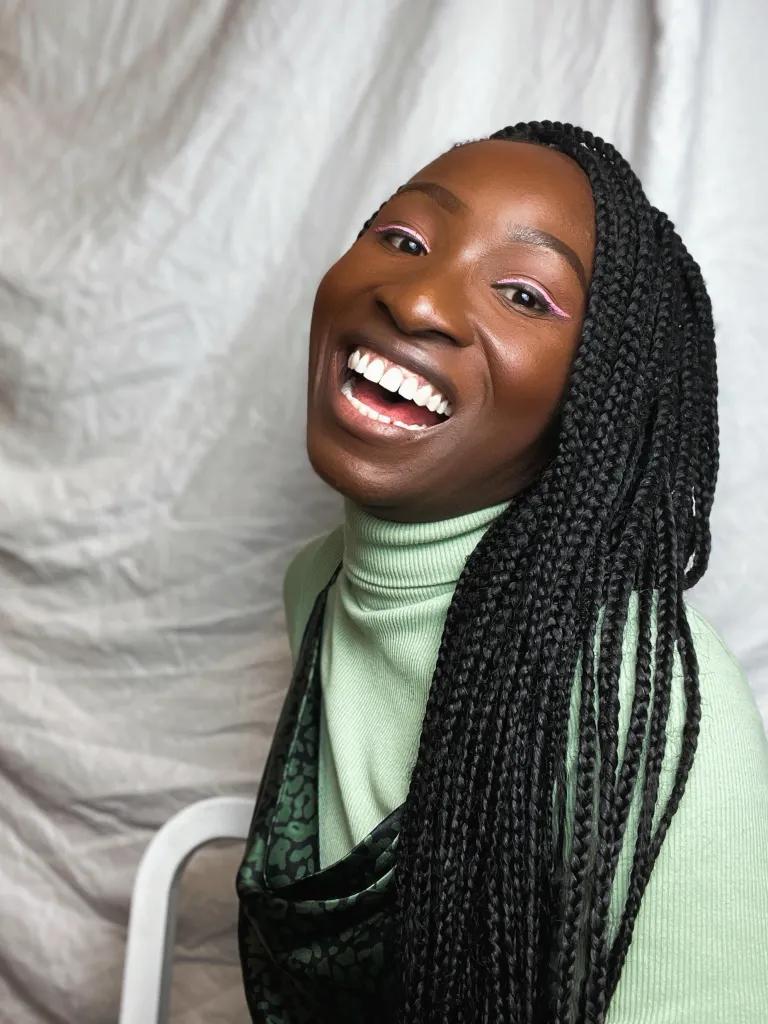
Ucheoma Onwutuebe is a Nigerian writer. She is a recipient of the O. Henry Prize for Short Fiction and the Waasnode Fiction Prize. Her story ‘Man’ was shortlisted for the 2026 ALCS Tom-Gallon Trust Award. She has received residencies from Yaddo, Art Omi, and the Anderson Center. Her works have appeared in A Public Space, Catapult, Bellevue Literary Review, Passages North, Prairie Schooner, Off Assignment, Bakwa Magazine and elsewhere. She received an MFA in Creative Writing (Nonfiction) from the University of Nevada, Las Vegas, and is currently a PhD student at the University of Tennessee, Knoxville.
You won the 2026 O. Henry Prize with your story 'Where Are You and Where Is My Money,' first published in A Public Space No. 32. Congratulations. How did that feel for you? Validating, or did it increase the pressure?
Very validating. It’s been a long time coming, and I am glad my work is finally getting major recognition. I am also grateful for all the assistance I have received from mentors and professors who believed in me.
Without giving much away, what is the story about?
A girl writes a chain of emails, searching for her boyfriend who absconds with all her savings.
How did the idea for the story come to you?
A couple of places: Netflix’s Tinder Swindler, Where’d You Go, Bernadette by Maria Semple, etc. I am really curious about fraud, so that was a good place to explore what it means to be defrauded by someone you love.
I particularly enjoyed the second-person narrative in ‘Man’. How did the choice for this particular style of narration come to you? Also, most writers treat second-person narratives with this fear, as if it could burn you to a crisp if you stand too close to it. Do you think the second person is hard to write? Why or why not?
I have written multiple stories using the second-person narrative, and I think it’s a flex. I absolutely enjoy it, and I don’t get the hate it gets. When done correctly, it’s a chef’s kiss. I’m a fan of the style. I often tell my students not to force a style. If the story wants to be told in 2nd-person narrative, it will come easily.
I had fun when I was writing the story, and I knew my readers would equally enjoy it. And because this is a style I love, I knew that the readers who would enjoy it would not have issues with the story.
Reading ‘Where Are You and Where Is My Money’ and ‘Man’, there were so many moments I struggled to keep my mouth shut–in a good way. How did you maintain the element of surprise throughout the narrative?
Nollywood is such a major influence on me. I don’t mean the prim and proper Nollywood. The almost-slapstick versions of Nigerian movies thoroughly excite me because the melodrama mirrors Nigerian culture. So I will credit the dramatic turn of the story to my close observation of Nigerian society and Nigerian movies.
For anyone trying to get into African literature, what are the top 5 books you’d recommend as their gateway into the rich tapestry we have to offer?
Purple Hibiscus by Chimamanda Ngozi Adichie is a major contender for best African novel. Then The Secret Lives of Baba Segi’s Wives by Lola Shoneyin. Things Fall Apart by Chinua Achebe is a required classic. Stay With Me by Ayobami Adebayo. The theme is quite similar to Shoneyin’s work, but the tragedy is more pronounced. And finally, My Sister The Serial Killer by Oyinkan Braithwaite.
How did writing start for you?
I had to stay at home for one whole year after graduating from secondary school, and the only way to keep sane during that period was to read and write. Since then, I have not stopped writing.
Who/what inspires your writing?
Life in general inspires me. Also, the fact that this is one thing that I am very good at has kept me at it.
How has your writing evolved, and what are the very deliberate things/routines you’ve adapted to ensure your growth?
Time has evolved my voice and my perception. Gratefully, writing is that one craft that becomes better the longer you exist. So I will say diligence and time have evolved my voice. I do not have any routines. I am in grad programs that require you to write semester-long, so I have no other choice but to write.
Let’s philosophise a little. How do you see writing?
A craft. A vocation. If you don’t train at it like you would any other skill, you won’t go far.
You are very well acclaimed, have won some prestigious prizes and have published work in top journals. What is the secret?
Diligence. Dusting yourself up again after rejections and trying again and again. This is the only thing that puts food on my table, so I had better be good at it.
In many African societies, history and recollection of stories were oral before they became written. What responsibility does the modern African writer have in preserving this collective memory?
To document as much as one can. Whether you are a writer, content creator, or archivist, just keep documenting. Talk to your grandparents, your parents, uncles and aunties. Listen to kitchen gossip. Watch older African movies and preserve them if you are in the position to. Tell your children about how life used to be before now.
When institutions fail, can fiction become a form of justice? Why or why not?
Fiction or storytelling is so powerful; that's why dictators gag free speech and throw writers in prison.
We live in an era of information overload but, arguably, diminishing attention. Is literature becoming more necessary or less relevant?
More necessary. A book will also be preferable to doomscrolling.
What conversations do you think contemporary African writers are still avoiding having in their literature?
How can we make a living from this, and who is paying us? How is the person paying us dictating how we write?
For Chinua Achebe, stories are not merely decorative; they serve as instruments of power that can either uphold oppressive systems or empower marginalised voices. He often argued that storytelling is a political act, whether the writer intends it or not. In your own work, how conscious are you of the political weight your stories carry?
If you are Nigerian, it is hard to escape politics in your art, especially as writers. It will always creep in. I don’t even have to try hard to be political, but you can always see my characters grappling with the reality of their world that is heavily influenced by politics;
Toni Morrison spoke about refusing to write for the white gaze. ‘I have spent my entire writing life trying to make sure that the white gaze was not the dominant one in any of my books.’ Must African writers still negotiate the expectations of international readers in terms of language, certain cultural realities and writing styles, or has contemporary African literature finally earned the freedom to write without explanation?
We cannot avoid the fact that the West still has more purchasing power. I believe there is a creative trick to maintain your creative licence as an African writer and still sneak in a bit of commentary for the sake of your international readers. Even the West is in search of your ‘authenticity’ and overtly pandering to them on the page will not take you far.
Is there a piece of craft advice that has stayed with you over time — something you still return to when you write?
Read a lot and write.
Any final words for writers out there still finding their voice, still finding themselves and their place in this large ecosystem of writing?
Read voraciously.