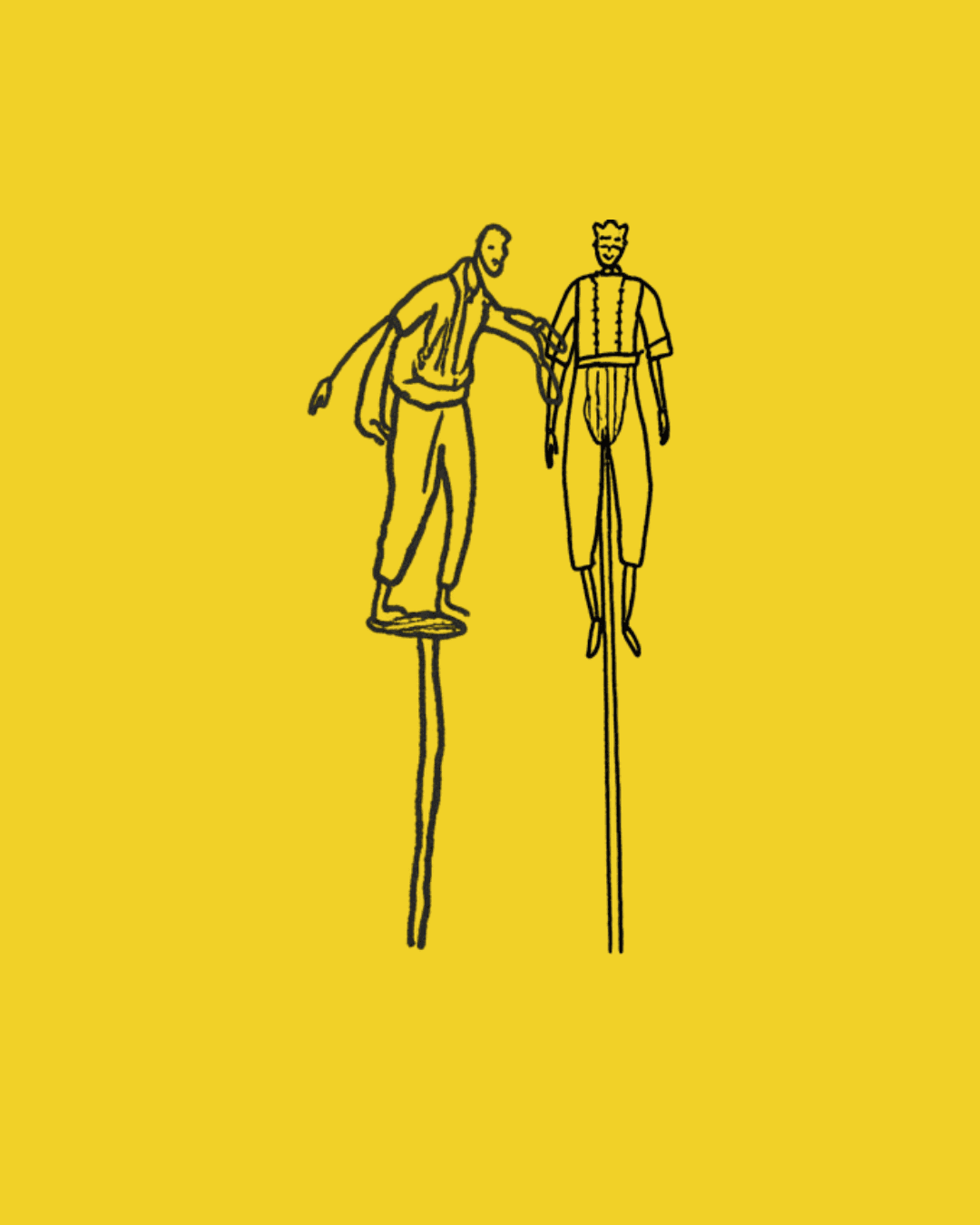
Christmas in Ghana hits different, but in Tema? Huh! It doesn’t start with carols or gifts; it comes with something special: Kakamotobi, the Masquerade Carnival. In Tema, Christmas wasn’t Christmas unless there was a masked figure somewhere on the streets, threatening to either bless your day or scar you emotionally. If you grew up here, you know exactly what I’m talking about: colourful costumes, brass-band madness, wild dancing, and those frightening masks that almost made all of us want to pack our bags and leave Earth.
I can’t lie—every child in Tema was lowkey terrified of the masqueraders. And the costumes, though matched with the masks, were terrifying; they always ate! Sequins, feathers, beads, all sparkling in the sun. It was like watching a walking rainbow swag. The masks had bulging eyes that stared without blinking, mouths twisted into crooked grins, and teeth that looked permanently ready to bite. Some were so uneven they seemed rushed, like whoever carved them lost patience halfway through or the lights went out and they just continued anyway. At all. Parents even used them as threats: Keep misbehaving and I’ll let the masquerade catch you.’ Or ‘Kakamotobi bra bɛ kye akwadaawei’. And trust me, we behaved immediately. I’m not capping. Not gonna lie, have you seen those masks before? Those things were not designed for kids. Please let’s be real.
But the funny thing? Even though we were scared, we still followed them around. Curiosity? Oh yes. Fear couldn’t stop us from enjoying the vibe. Their dancing was too sweet. Their feet stomped, slid, and jumped in perfect rhythm, every step following the drumbeats as if their bodies were an extension of the music itself. Arms swung wide, Boduas, fly whisks raised high, spinning through the air. Shoulders rolled, torsos twisted, and their whole bodies swayed, bending one way then the other in smooth, unstoppable motion. They knew every current dance, every challenge, every rhythm. One moment, they danced in unison, then burst into individual flair, leaping and twirling with abandon. Beads and feathers caught the sunlight, flashing with every spin, every jump, every sway. The brass band alone? Eii, pure magic. On the days the masquerade paraded the streets, it was always a different energy–you could hear drums echoing down the streets, smell roasted corn at every corner, and feel the energy bouncing off the walls of the houses lining the streets. As if planned, these people in these scary masks sometimes tried to scare some kids. For the fun of it, I am sure. These kids would squeal and run to hide behind their older siblings (or whoever they were there with) when a terrifying mask came near. Then, a second later, after they had left, they peered out, unable to resist the spectacle.
In Tema, every community has two or three masquerade groups, so just imagine the chaos. I grew up in Community 8 (C8), and every group had a unique name and style. On Christmas Day, they’d all meet up in their communities, start warming up, and then begin their journey with dancing and playing brass from C9 to C8 to C7 and beyond until eventually every group met at one big point. By then, the energy? Chale, you would not believe it. Ɛsɛ wani! Current songs, old hits, dance battles without moments of rest.
Before the masquerade parade, most families spent the morning cooking and sharing food. In my house, my mom would make jollof and chicken, serve some to neighbours, and keep some for us. Add a bottle of malt or Don Simon, and Bronya, the Ghanaian Christmas mood was activated.
I remember one year my cousin tried to sneak two pieces of chicken while no one was looking and ended up getting caught, and everyone laughed, including my mom, and it became part of our Christmas story. After that little family chilling, we step outside to join the masquerade parades. Out there, we would watch them, dance with them, and follow them to their big meeting point. The way the masqueraders moved with confidence, flipping and jumping like the streets were their stage? I respected them from afar, even while clutching my sibling’s hand like she was my shield.
I remember one year, I cultivated this (from hindsight) stupid idea of really wanting to join the masqueraders club. I was intrigued by all the razzmatazz—the dancing, the hype, the stage performances, the awards night, which ended with people being awarded best costume, best dancer, best group. I was sure I wanted it all, and so sure I could do it all. However, I didn’t factor in one thing: the mask. I forgot that all that came with wearing the mask! And the mask said, ‘Try me and cry.’ I just couldn’t bear to put that scary thing on my face without scaring myself crazy. So, I stayed in the audience, shouting and laughing like the supportive fan I was born to be.
In a Tema Christmas celebration, even celebrities and Members of Parliament joined the carnival. Imagine seeing Kwesi Arthur, R2Bees, and all those Tema stars jumping into the masquerade madness. Chale, your heart would be so full of joy! You’d forget the fear and start dancing too. You wouldn’t want to miss it because that was one of the times in the whole year you’d get to see these big, big stars—even if from afar. From the 25th to the 27th, and even into the New Year, the festival doesn’t sleep. It’s loud, it’s colourful, it’s chaotic, it’s beautiful…it’s home. And I would always remember that.
Where I’m from, Christmas is the aroma of jollof, the sounds of brass bands, masqueraders dancing their hearts out on the streets and communities coming together. Christmas like this? Only in Tema.
Abigail Foria is a Ghanaian writer and Publishing Studies student with a deep interest in exploring culture, memory, and the subtle emotions that shape everyday life. Her writing focuses on capturing often-overlooked moments and giving voice to experiences many people can relate to. Grounded in honesty, observation, and reflection, her creative process reflects her commitment to authentic storytelling. She is passionate about contributing to Ghana’s creative landscape by supporting genuine narratives and sharing stories that matter. For Abigail, every story holds value, and she seeks to preserve them through her writing.