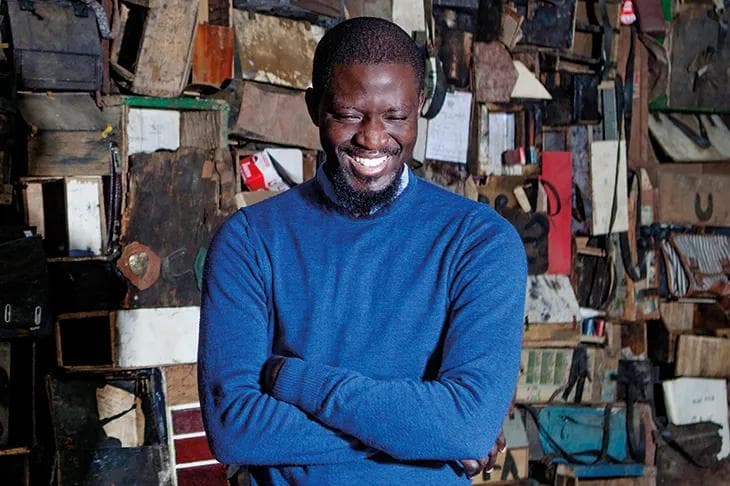
Ghanaian artist Ibrahim Mahama has become the first African to claim the No. 1 spot on ArtReview’s prestigious Power 100 list, marking a monumental moment for contemporary African art and global cultural influence.
The annual ranking—compiled by 30 leading art experts worldwide—highlights individuals shaping the international art landscape. Mahama’s rise to the top signals a shifting centre of gravity in the art world, away from traditional Western power hubs and toward new cultural ecosystems.
Speaking to The Guardian, Mahama said he felt humbled by the honour, recalling how he first discovered the list as a student at Kwame Nkrumah University of Science and Technology (KNUST) in 2011.
“For me to be part of this, especially coming from a place like Ghana… is quite humbling,” he shared.
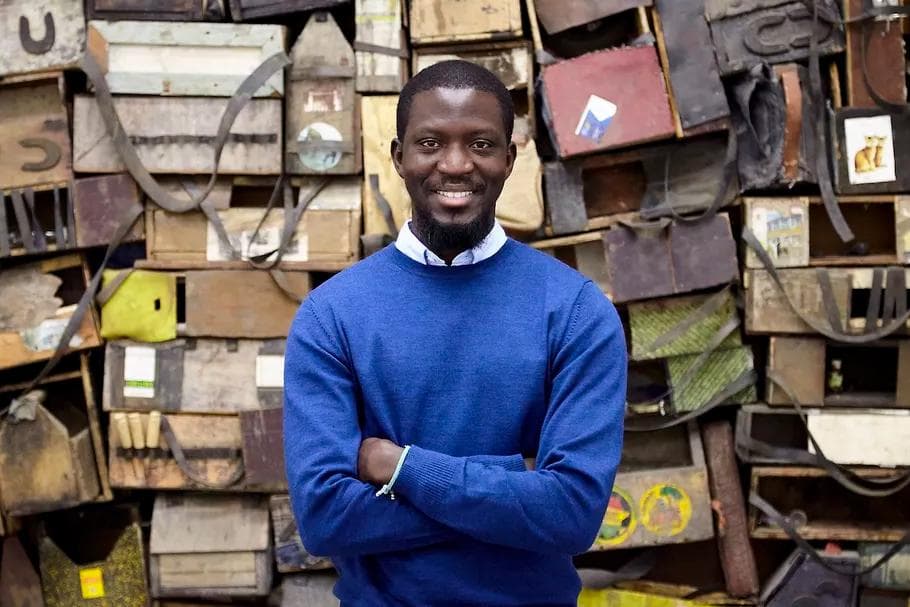
Based in Tamale, Northern Ghana, Mahama is globally known for monumental installations made from jute sacks, remnant textiles, discarded industrial materials, and found objects such as old train carriages and hospital beds. His works explore themes of labour, histories of extraction, and the politics of materials.
Over the past decade, he has staged widely acclaimed projects including:
- Purple Hibiscus (Barbican Centre, 2023), where he draped the iconic London venue in 2,000 sqm of bright pink fabric stitched in Ghana
- Songs About Roses (Fruitmarket Gallery, Edinburgh, 2024), praised as 'extraordinary' and compared to a great magic-realist novel
- Multiple international shows across Europe, Africa, and North America
The Guardian’s Jonathan Jones has described Mahama as standing 'up there with William Kentridge and Anselm Kiefer as one of today’s most important artists.'
Mahama’s influence goes far beyond galleries. His top ranking on the Power 100 stems not only from his artistic output but from his radical commitment to building creative infrastructure in Ghana.
Through revenue from working with global galleries such as White Cube and Apalazzo, Mahama has established a network of cultural institutions in Tamale, including:
- The Savannah Centre for Contemporary Art (SCCA)
- Red Clay Studio
- Nkrumah Volini
These spaces host residencies, children’s workshops, student programmes, archives, and exhibitions, offering young artists opportunities that previously didn’t exist in northern Ghana.
ArtReview notes that Mahama represents a new generation of artists who are not only making art but reshaping the global art ecosystem by creating support structures for others.
ArtReview’s top 10 further reflects a world in transition, with increasing influence from Africa, the Middle East, and Asia:
- Ibrahim Mahama (Ghana)
- Sheikha Al-Mayassa bint Hamad Al-Thani (Qatar)
- Sheikha Hoor Al Qasimi (UAE)
- Wael Shawky (Egypt)
- Ho Tzu Nyen (Singapore)
- Amy Sherald (USA)
- Kerry James Marshall (USA)
- Saidiya Hartman (USA)
- Forensic Architecture (UK-based group)
- Wolfgang Tillmans (Germany)
The list underscores the rise of new cultural centres at a time when traditional Western museums face funding crises and structural shifts.
For Ghana, Mahama’s achievement is historic. His recognition affirms the country’s growing impact on contemporary art and offers inspiration for a new generation of African creatives.
Mahama hopes his rise shows young artists across the continent that they belong in global conversations—not on the sidelines.
'I hope this helps younger artists realise that they are part of the contemporary discourse,' he said.