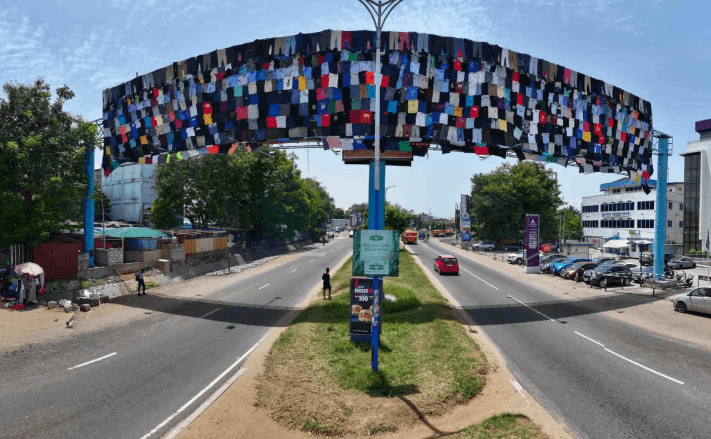
Ghanaian multidisciplinary artist Emmanuel Aggrey Tieku is redefining how sustainability is communicated in everyday public spaces through his long-term project, Baleboards, which centres on the environmental impact of textile waste in Ghana.
Focusing on the phenomenon locally known as “Obroni Wawu” -a term used to describe second-hand clothing-Tieku’s work brings renewed attention to the global fashion industry’s waste crisis. His approach merges art, environmental advocacy and cultural commentary, positioning public installations as tools for awareness and reflection.
Born in 1994 in Cape Coast, Tieku is both a civil engineer and an artist, working between Accra and Paris. His practice is deeply rooted in personal history, drawing inspiration from the fabrics collected by his grandmother. This early exposure to textiles has evolved into a critical engagement with the lifecycle of clothing, particularly discarded garments that end up in Ghana.
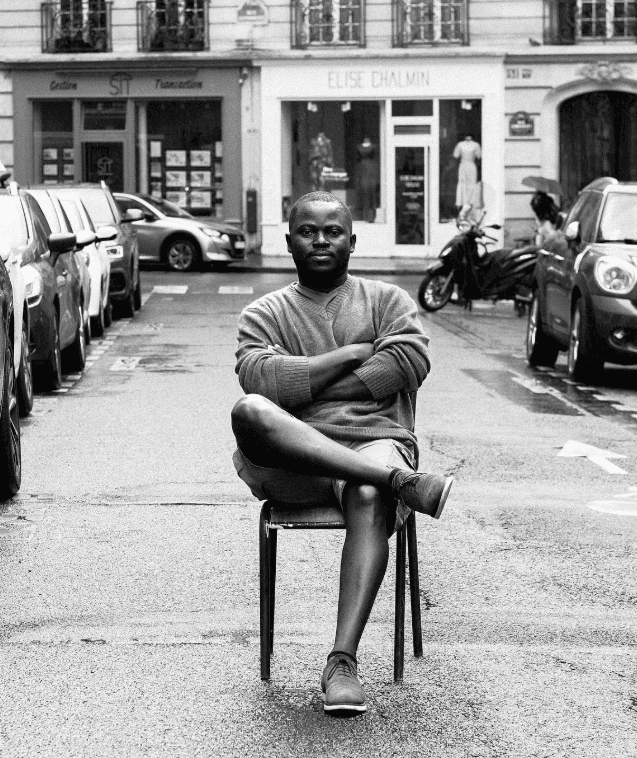
For his work, Tieku sources second-hand clothing from beaches, landfills and Kantamanto Market in Accra, widely recognised as the largest hub for second-hand textile resale in Ghana. These materials, often considered waste, are repurposed into large-scale installations that challenge conventional narratives around fashion and consumption.
Spanning from 2026 to 2040, Baleboards forms part of his broader body of work titled How to Heal a Broken World, a lifetime exploration of textile waste, material innovation and cultural memory. Through this project, Tieku seeks not only to document the issue but also to provoke dialogue around sustainability and accountability.
At the core of Baleboards is the transformation of discarded clothing into billboard-sized installations. Traditionally used for advertising and promoting consumer goods, billboards are reimagined as platforms for environmental storytelling. Instead of polished images and aspirational messaging, Tieku fills these spaces with compressed garments, school uniforms and textile remnants-physical evidence of overconsumption and waste.
The project’s first iteration, Obroni W’awu, has been installed across key locations in Accra. The phrase, which translates to “dead white man’s clothes”, reflects the reality of a global system in which vast quantities of second-hand clothing are exported to African countries. It is estimated that approximately 15 million garments arrive in Ghana each week, with a significant portion ultimately becoming waste due to oversupply and limited recycling infrastructure.
By scaling these materials onto billboards, Tieku disrupts the visual language of consumer culture. Where traditional advertising promotes newness and desirability, Baleboards presents the consequences of excess, forcing viewers to confront the environmental cost of fast fashion.
The installations also highlight a critical imbalance within the global fashion system. While cities like Accra play a central role in the second-hand clothing trade, they often lack the infrastructure required to manage the resulting waste. This creates environmental and social challenges that disproportionately affect communities in the Global South.
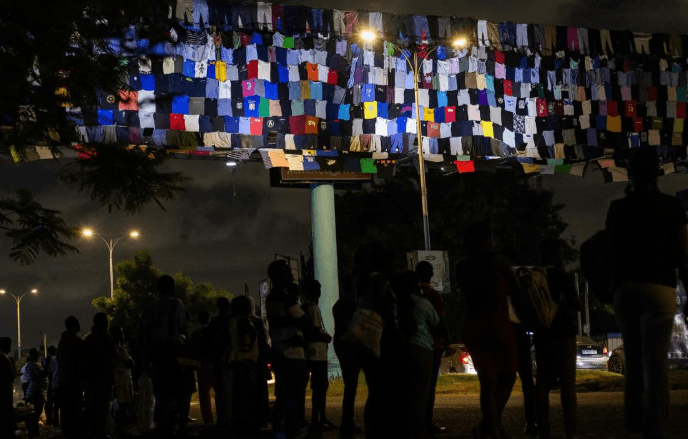
Beyond its visual impact, Tieku’s work raises pressing questions about responsibility, both at individual and systemic levels. It challenges audiences to consider not only what they wear, but also what happens to clothing once it is discarded. In doing so, the project reframes public space as a site of accountability rather than passive consumption.
Through Baleboards, Emmanuel Aggrey Tieku positions art as a powerful medium for change, urging both local and global audiences to rethink their relationship with fashion. His work serves as a reminder that sustainability is not an abstract concept, but a lived reality shaped by everyday choices and global systems.
As the project continues to evolve over the coming years, it stands as a bold intervention in both the art world and environmental discourse-one that insists on visibility, responsibility, and transformation.